
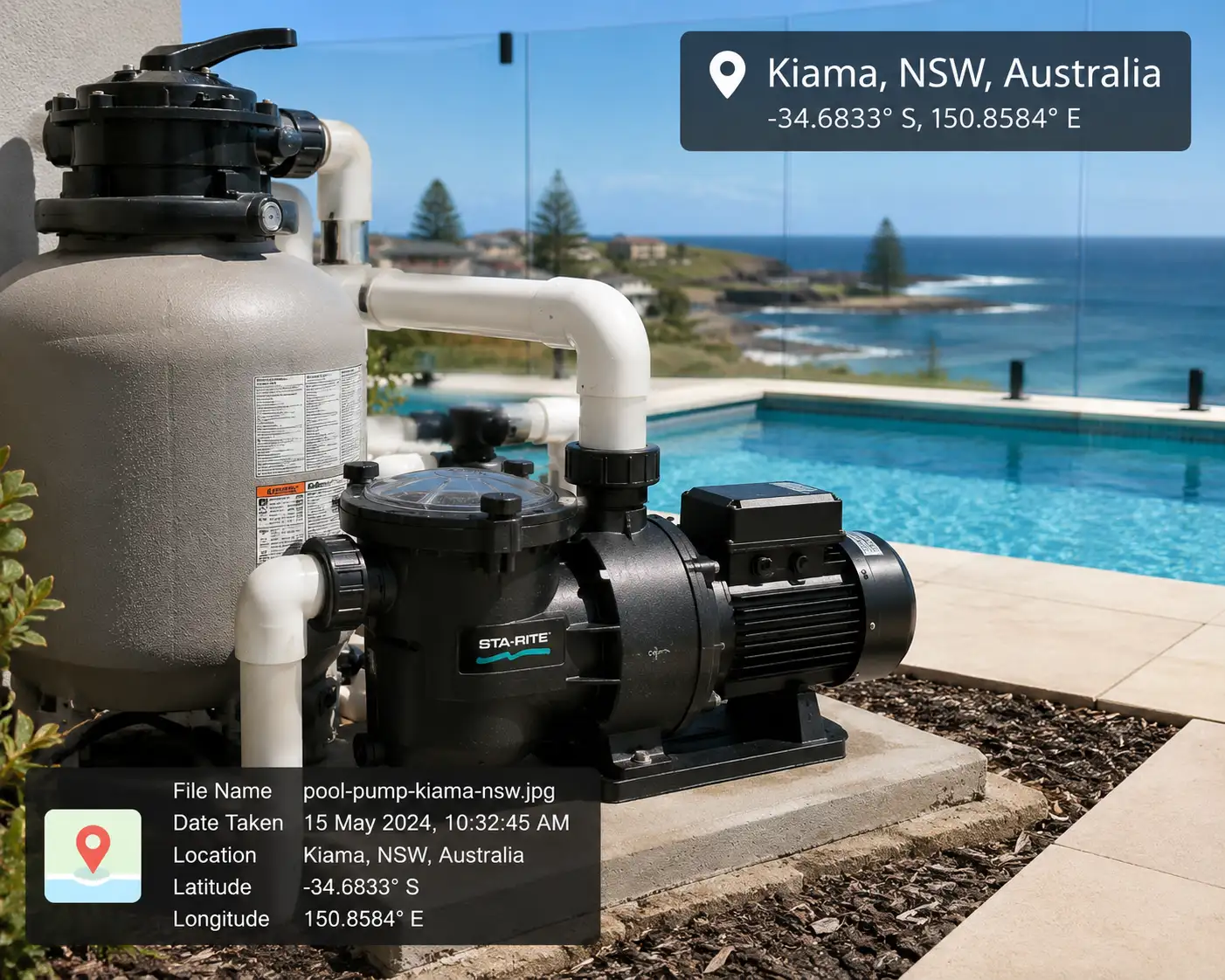
One of the most common questions we hear from pool owners is, “How long should I run my pool pump each day?” Many people assume the answer is simple, but the ideal running time depends on several factors including the size of your pool, the type of pump you have, the season and how often the pool is used.
Running your pump for too few hours can lead to cloudy water, algae growth and poor water quality. Running it for too long can significantly increase your electricity bill without providing any additional benefit.
At Illawarra Pool Cleaning, we help homeowners throughout Wollongong, Shellharbour, Kiama and the South Coast optimise their pool equipment for excellent water quality while keeping running costs under control.
This guide explains how long you should run your pool pump and how to get the best balance between clean water and energy efficiency.
Why Does Your Pool Pump Need to Run?
Your pool pump is the heart of your pool’s circulation system.
Every time it runs, it:
- Circulates water
- Pushes water through the filter
- Allows the chlorinator to produce chlorine
- Distributes pool chemicals
- Removes dirt and debris
- Prevents stagnant water
- Helps stop algae forming
Without adequate circulation, even perfectly balanced water can quickly become cloudy or green.
The Goal Is Water Turnover
Rather than thinking in hours, it’s helpful to think about water turnover.
Water turnover is the time it takes for your pump and filter to circulate the entire volume of your swimming pool.
Most residential pools should achieve one to two complete turnovers each day, depending on weather conditions and pool usage.
The exact running time depends on:
- Pool size
- Pump flow rate
- Filter efficiency
- Chlorinator requirements
- Water temperature
Recommended Pool Pump Running Times
As a general guide:
Summer
8–10 hours per day
Summer places the highest demand on your pool.
Higher temperatures, increased swimming and stronger sunlight all increase chlorine consumption and place greater demand on your filtration system.
Autumn
6–8 hours per day
Leaves, pollen and organic debris increase during autumn.
Maintaining good circulation helps keep the water clean while supporting your filter.
Winter
4–6 hours per day
Although chlorine demand decreases during winter, your pool still requires circulation to prevent stagnant water and maintain water quality.
Spring
6–8 hours per day
Spring is when algae begins becoming more active.
Increasing pump operation before summer helps prepare your pool for the warmer months ahead.
Does Pool Size Matter?
Yes.
Larger pools naturally contain more water and may require longer running times.
However, pump size is equally important.
A larger variable-speed pump may circulate water more efficiently than an older, smaller single-speed model.
Professional equipment sizing ensures your pool achieves adequate turnover without unnecessary electricity use.
Variable Speed Pumps Save Electricity
Modern variable-speed pumps have transformed pool ownership.
Unlike traditional single-speed pumps, they can operate at lower speeds for longer periods while using significantly less electricity.
Benefits include:
- Lower power bills
- Quieter operation
- Improved filtration
- Better circulation
- Longer equipment life
- Reduced environmental impact
Many homeowners recover the upgrade cost through electricity savings over time.
Should I Run My Pump During the Day or Night?
For most pools, daytime operation is recommended.
Running the pump during daylight allows:
- Chlorine to circulate while sunlight is consuming it
- Better debris collection
- Improved filtration during swimming hours
- More effective chlorinator operation
If you’re on an off-peak electricity tariff, running part of the filtration cycle overnight may also be beneficial.
The ideal schedule depends on your equipment and electricity plan.
Signs Your Pump Isn’t Running Long Enough
If your pump isn’t operating for sufficient time, you may notice:
- Cloudy water
- Green algae
- Floating debris
- Poor chlorine readings
- Dirty pool walls
- Weak water circulation
Increasing pump run time is often one part of solving these problems, along with checking water balance and filtration.
Can You Run Your Pump Too Long?
Yes.
Many pool owners believe more is always better, but excessive pump operation can:
- Increase electricity costs
- Wear out equipment sooner
- Shorten pump lifespan
- Provide little additional benefit
The aim is to circulate your water efficiently—not continuously.
Factors That Affect Pump Running Time
Every swimming pool is different.
Pump hours should be adjusted according to:
Weather
Hot weather increases chlorine demand.
Rain
Heavy rain introduces contaminants and may require additional circulation.
Pool Usage
Frequent swimming means more sunscreen, body oils and debris entering the water.
Trees
Pools surrounded by trees usually require longer filtration because of increased leaf litter.
Pool Heating
Heated pools generally benefit from additional circulation to maintain even water temperature.
Tips to Reduce Electricity Costs
You don’t need to compromise water quality to save money.
Simple ways to reduce running costs include:
- Upgrade to a variable-speed pump
- Keep your filter clean
- Empty skimmer baskets regularly
- Balance water chemistry correctly
- Use a pool cover
- Remove leaves promptly
- Service equipment regularly
- Optimise pump timers
Small improvements can result in noticeable savings over the course of a year.
Professional Advice Makes a Difference
Many homeowners either overrun or underrun their pool pump because they’re unsure what their pool actually needs.
During a professional service, we can assess:
- Pool volume
- Pump size
- Filtration efficiency
- Chlorinator performance
- Energy consumption
- Water circulation
We’ll recommend the ideal operating schedule based on your pool and local conditions.
Pool Pump Advice Across the Illawarra
Illawarra Pool Cleaning helps homeowners throughout:
- Wollongong
- North Wollongong
- Fairy Meadow
- Corrimal
- Bulli
- Woonona
- Thirroul
- Shellharbour
- Shell Cove
- Albion Park
- Oak Flats
- Kiama
- Kiama Downs
- Minnamurra
- Jamberoo
- Gerringong
- Gerroa
- Berry
- Shoalhaven Heads
Whether you’re trying to reduce electricity costs or improve water quality, we can help optimise your pool system.
Frequently Asked Questions
Can I run my pool pump for only four hours a day?
During winter, many pools can operate successfully for around four to six hours. During summer, however, most pools require considerably longer filtration.
Will running my pump longer keep my pool cleaner?
Only up to a point. Once your pool has achieved adequate water turnover, additional running time usually provides minimal benefit while increasing electricity costs.
Should I turn my pool pump off when I’m on holiday?
No. Your pump should continue operating while you’re away to maintain circulation, filtration and chlorine production.
Does a variable-speed pump need to run longer?
Yes, but because it operates at lower speeds while using much less electricity, it is often both more efficient and more economical than a single-speed pump.
Can running the pump too little damage my pool?
Indirectly, yes. Poor circulation can contribute to algae growth, cloudy water, poor chemical distribution and increased strain on your filtration system.
Need Help Optimising Your Pool Pump?
Running your pool pump for the correct amount of time is one of the easiest ways to reduce electricity costs while maintaining crystal-clear water. Every pool is different, and the ideal schedule depends on your equipment, pool size and seasonal conditions.
At Illawarra Pool Cleaning, we provide expert advice on pool pump operation, equipment upgrades and ongoing maintenance throughout Wollongong, Shellharbour, Kiama and the South Coast. Whether you need a timer adjustment, a variable-speed pump upgrade or a complete equipment assessment, we’re here to help.
Call 0410 981 271 today for a free quote and expert advice on improving your pool’s efficiency.